


























Glued down floor or floating?
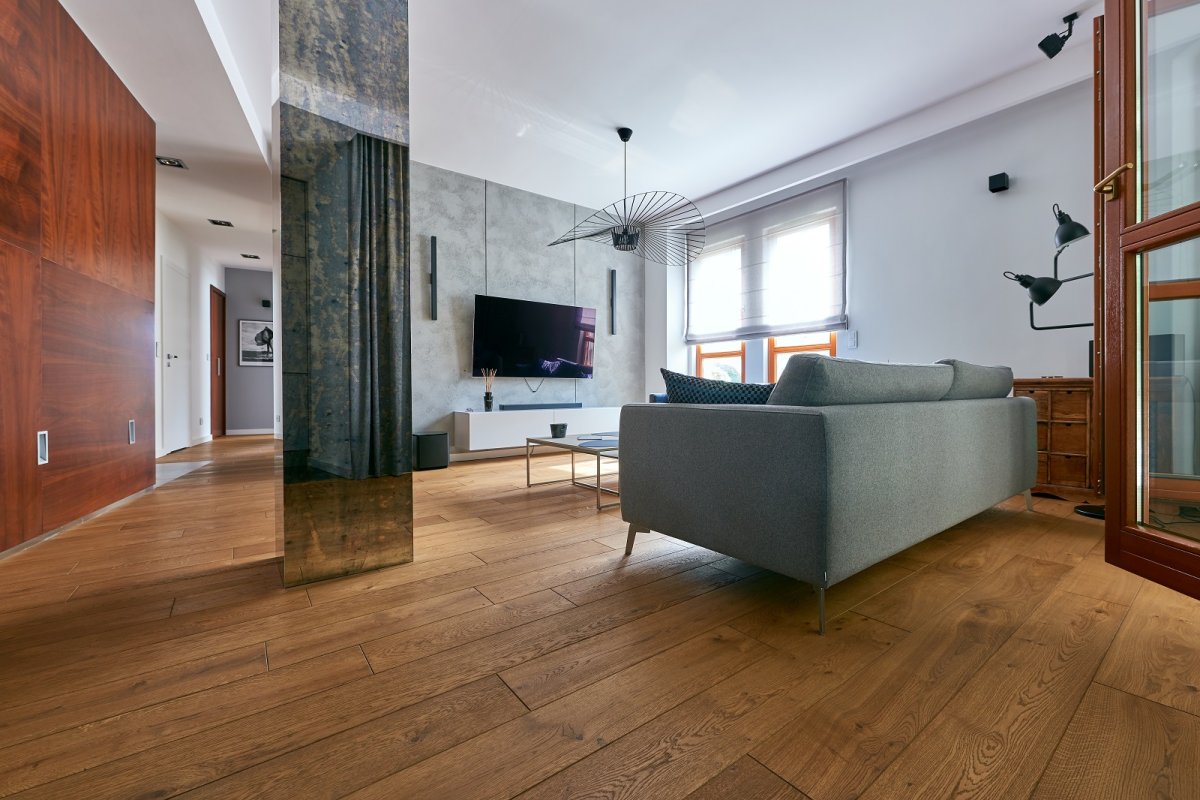
Gluing wooden flooring is a universal and popular solution. This way, you can lay wooden floors of various types, from traditional parquet to engineered boards. Wooden floors can be glued to commonly encountered substrates such as concrete screeds, as well as wooden subfloors. There is also no issue if the screed is installed over underfloor heating. The key to success is choosing the right adhesive for the type and quality of the substrate, as well as meticulous workmanship. Therefore, it is better to entrust the gluing of wooden flooring to an experienced installer. What are the advantages of wooden flooring laid "on glue"?
Floors glued in place are characterized by exceptional stability, provided by the absence of space between the underlayment and the floor. By eliminating the resonance effect, it ensures quietness and comfort in everyday use. Glued flooring also does not pose a problem for renovation, allowing us to enjoy a beautiful floor for many years.
If you lack experience in finishing work and plan to lay wooden floors yourself, you can opt for a floating system. However, be prepared for some inconveniences, such as noises when walking, especially in areas with uneven subfloors. For floating floors, caution should be taken when placing furniture, especially heavy pieces (e.g., old antique wardrobes, etc.). If a room is longer than 6m, avoid placing too much weight at the ends of the floating floor, as it may lead to premature disconnections in the central section (causing the floor to slightly lift). Such problems do not occur with glued floors. When deciding on installing wooden flooring over underfloor heating, it is recommended to choose a glued floor, along with the appropriate adhesive specifically designed for underfloor heating.
