

























Solid hardwood flooring or engineered? Which one to choose?
We want to have a new, beautiful wooden floor. What kind of boards should we choose? Solid boards or two-layer boards? Or maybe three-layer boards? Which ones will be better, more beautiful, and above all: which ones will serve us for a long time, without losing any of their beauty and quality? We will try to answer these questions in this article.
Solid boards. They are made entirely from a single piece of wood. When placed on the floor, they create a solid, uniform surface. This category includes parquet, mosaic, traditional floorboards. The most popular solid boards are made from oak, ash, beech, and pine. Of course, they can be finished in various ways: varnished, oiled-waxed, stained, brushed, etc. However, there is no place to discuss that now. The width and thickness of solid boards can also vary - depending on the manufacturer.
It is commonly believed that solid boards can be sanded multiple times. This is often repeated by supporters. However, this is not entirely true. Most floors made of solid boards are joined by tongue and groove. Sanding such a floor can only be done to the level of the tongue - meaning not the entire thickness of the board. The top layer that can be sanded usually has a thickness of a few millimeters - the same as in layered boards.
Solid boards are also more susceptible to the microclimate in the room. Wood is a hygroscopic material, which means it releases moisture to the environment or absorbs it. In winter, when the room is heated, the boards release moisture into the environment. They dry and distort across their entire surface because they are made of a uniform material. The distortions can be significant. Wood expands and contracts all the time.
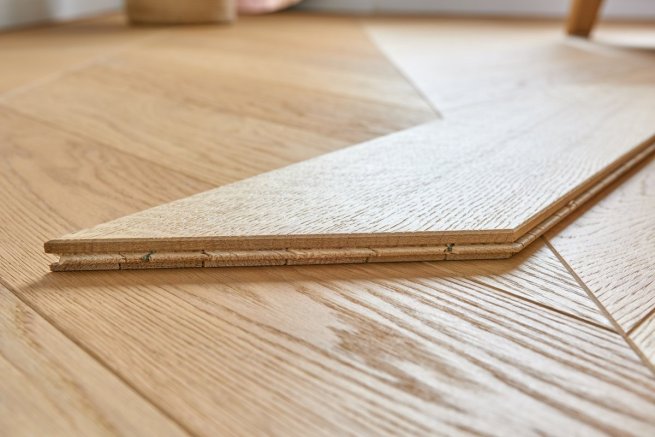
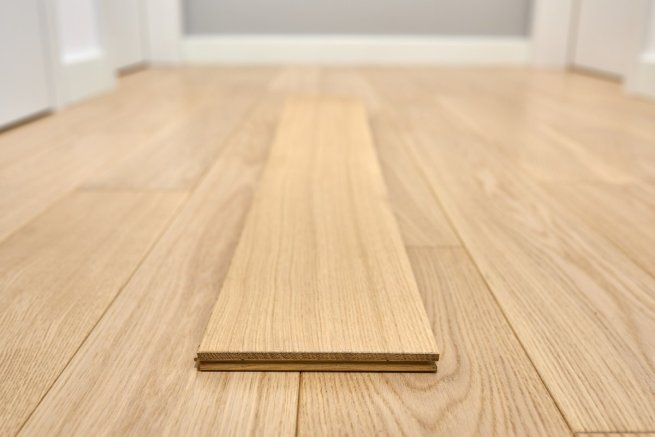
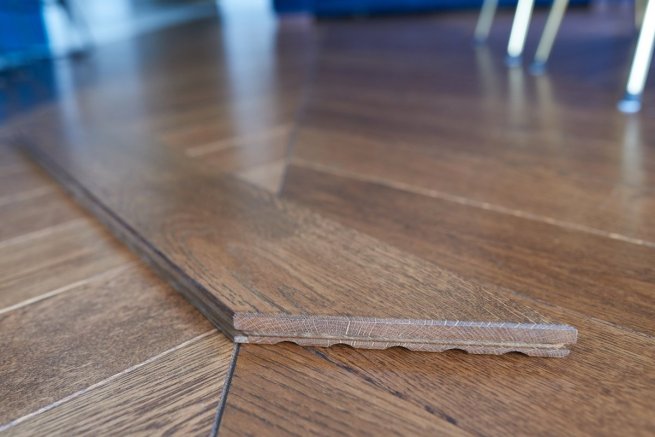
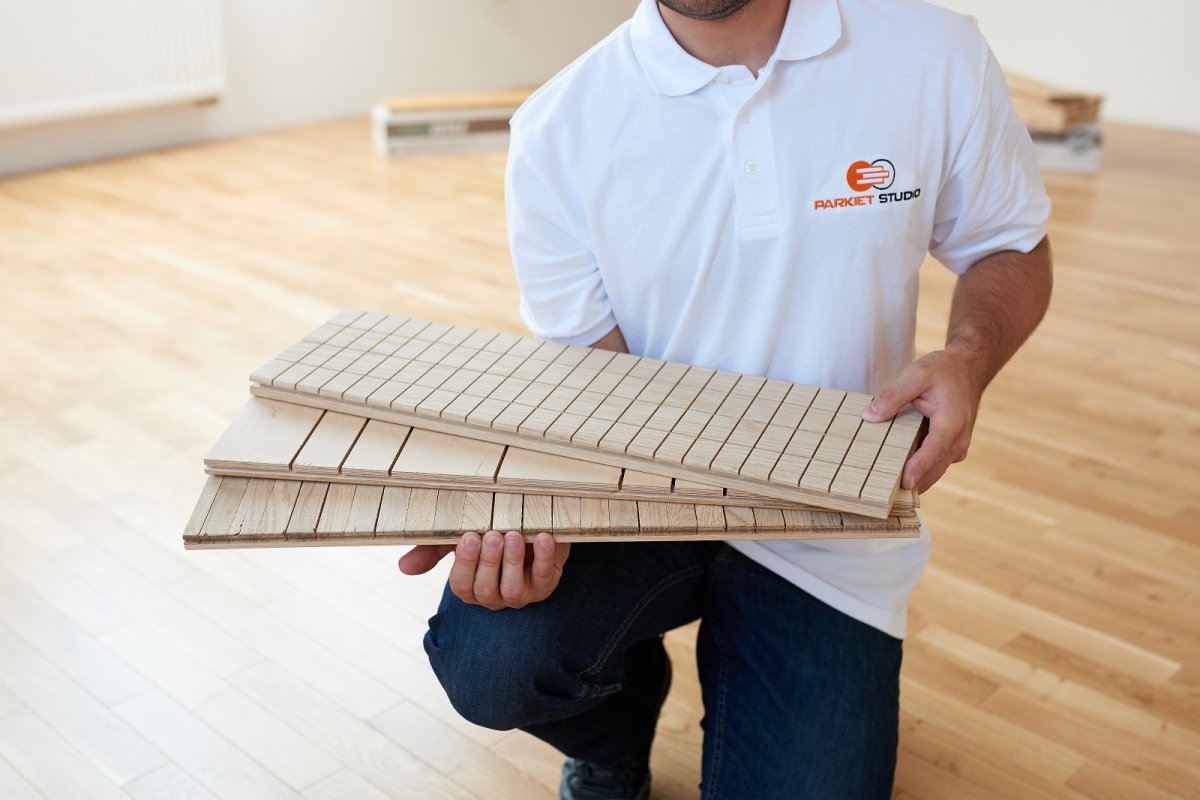
Layered boards. They are made of several layers (two or three), making them much more resistant to the stresses that arise in conditions described above - moisture, drying. The boards are constructed in such a way that the wood grain in the individual layers is arranged perpendicular to each other. Wood tends to twist in line with the grain. The tightly adhered layer with grains arranged perpendicularly prevents this. Thanks to this technique, the board is much more resistant to the conditions in the room.
A very important advantage is that only the top layer of the floor is made of noble wood. The layers underneath are made of different wood or plywood. The top layer is a few millimeters thick and can also be sanded multiple times. When using the tongue and groove technique to the same depth as a floor made of solid boards in the same technique.
Layered boards can be used with underfloor heating. Solid boards, on the other hand, cannot. This is another argument for choosing them for your floor.
Layered boards are made from various, even exotic, wood species (of course, only the top layer). Therefore, we can afford even the most expensive and extravagant wood.
Supporters of solid board floors will certainly not decrease after reading this article, but we hope that any doubts about layered boards have been dispelled.