

























What type of flooring to choose? Laminate or hardwood?
Wooden floors are valued for the properties of the material they are made of, but they are also subject to its limitations. A significant issue may arise from the dimensional changes of individual floor elements, which occur due to natural processes of wood shrinking and swelling during seasonal changes in air humidity and temperature. Changes in the shape of elements are particularly crucial in the case of light shades of floors, such as maple, ash, or oak, especially when they are lacquered.
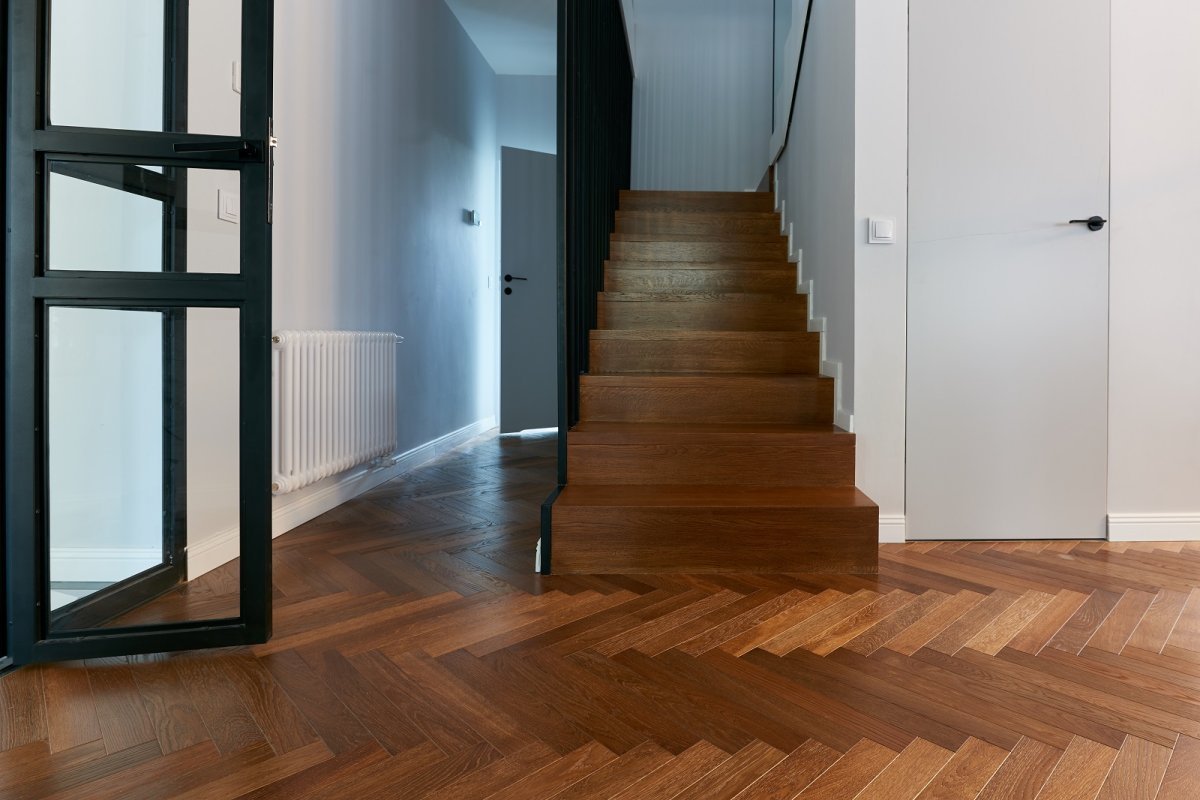
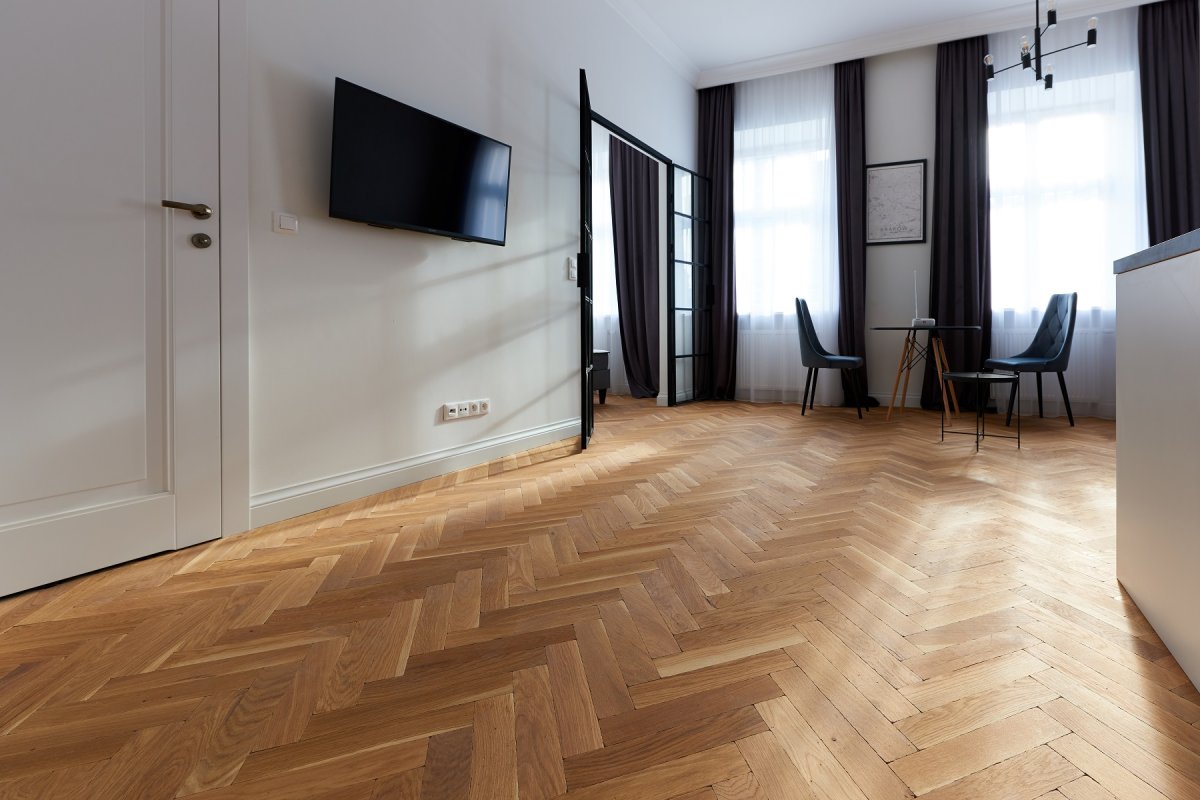
Wood is a hygroscopic material, so it reacts to changes in environmental conditions. The air humidity and room temperature have a significant impact on our floor. If we are concerned that our floor will expand and consequently develop gaps, we should choose smaller elements, such as parquet or mosaic. Parquet, with a width not exceeding 7 cm, is safer and more stable. Even with a neglected floor, the gaps in parquet will be much smaller than with wider planks.
Of course, if we opt for floorboards with a width of 18-20 cm, we can address or minimize the wood movement. In this case, if it is solid wood, we should purchase a stress-relief mat to maximize the floor's stability. And most importantly, ensure proper air humidity in our apartment during the autumn-winter period.
The dimensions of the wood on the floor should also be adjusted to the size of the rooms. If our investment is smaller, or if we have smaller rooms in it, let's invest in parquet. More smaller elements will visually enlarge our apartment and significantly add spaciousness to the interiors. On the other hand, if we have a large living room and interconnected large rooms, we recommend planks. The more space we have, the wider planks we should choose to emphasize the size and elegance of our four walls.
length: from 30 cm to 50 cm,
width: up to 7 cm.
length: up to 270 cm,
width from 7 cm to 28 cm.