

























Patterns for laying wooden floors
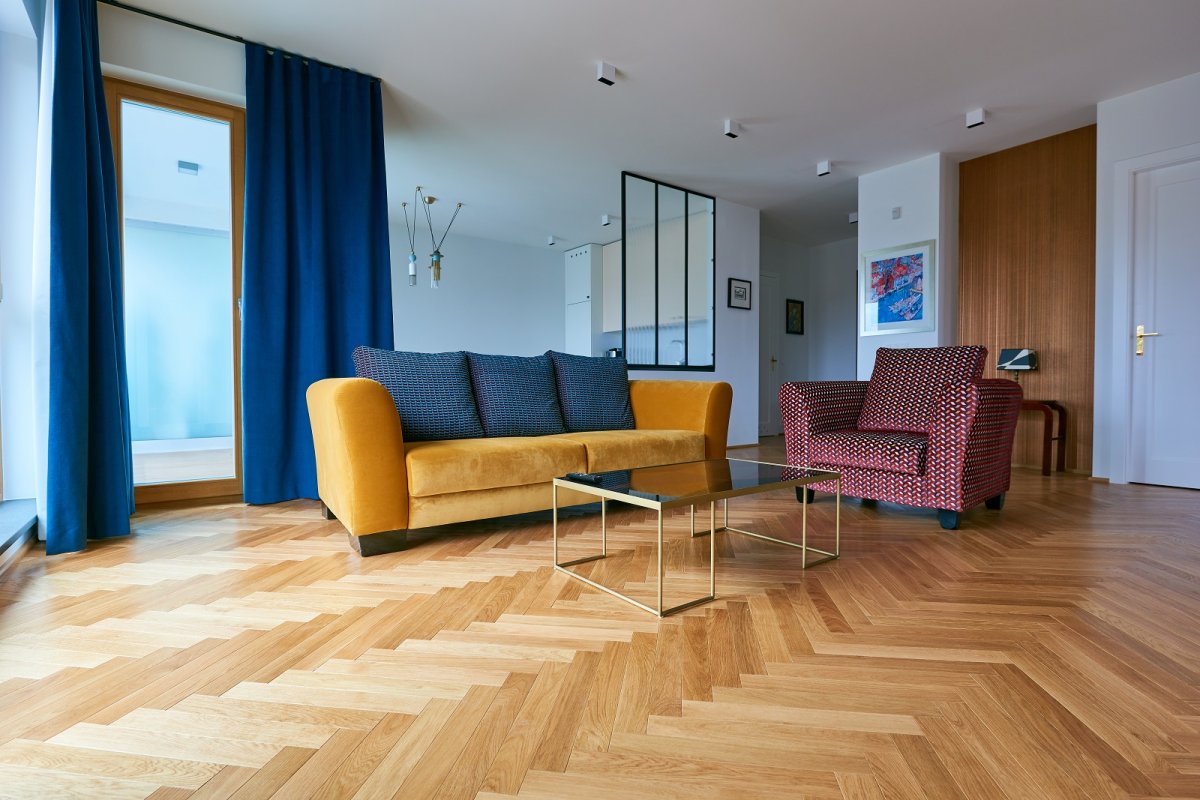
When planning the arrangement of a dream interior, it is impossible to overlook the floor. The choice of flooring is an extremely important stage of every project and determines the final character of the home space. Whether it will be modern or classic, minimalist or rich and elegant, depends in part on the floor we choose. Not only the type and color of the wood are important, but also the way in which we lay it. The pattern of the planks can vary - popular patterns include herringbone, checkerboard, ladder, and many other layouts that influence the atmosphere of the interior. The decision of what to choose should take into account the natural properties of wood. This is very important because different species (such as beech) require specific laying due to their hardness and tendency to shrink. Considering that some floors "move" more than others, the herringbone pattern is recommended for them.
Classic Herringbone | Double Herringbone
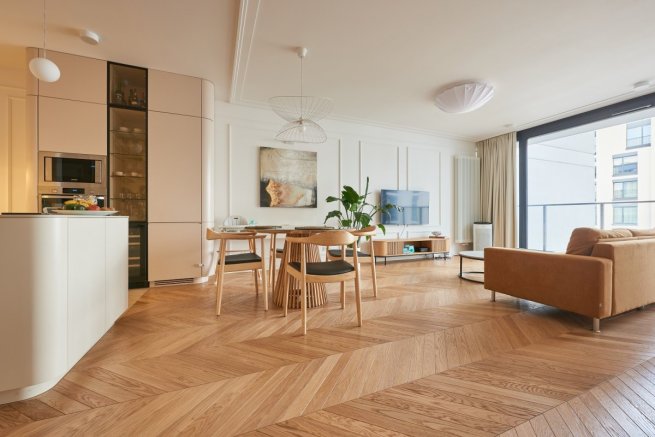
One of the most popular designs for laying wooden flooring is the classic herringbone pattern. In the past, it could be found in tenements, but today it is present in practically every type of interior. It is a timeless symbol of elegance and good taste. The classic herringbone pattern is characterized by placing planks of the same size at an angle. This type of flooring is usually light (mainly oak), delicate, and stands out with a small number of layers.
French Herringbone
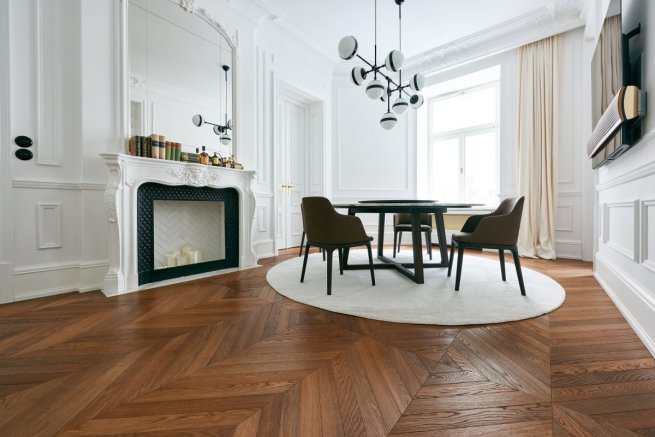
A very refined design for wooden flooring, featuring planks cut at a 45-degree angle. The resulting pattern resembles an elegant zigzag, and the way the planks are joined resembles the sharp point of an arrow. This type of parquet works well not only in classic, luxurious interiors but also in more modern and eclectic spaces.
Straight English Pattern
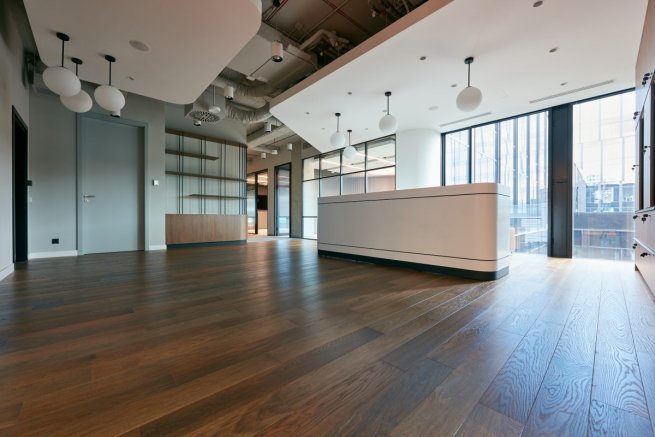
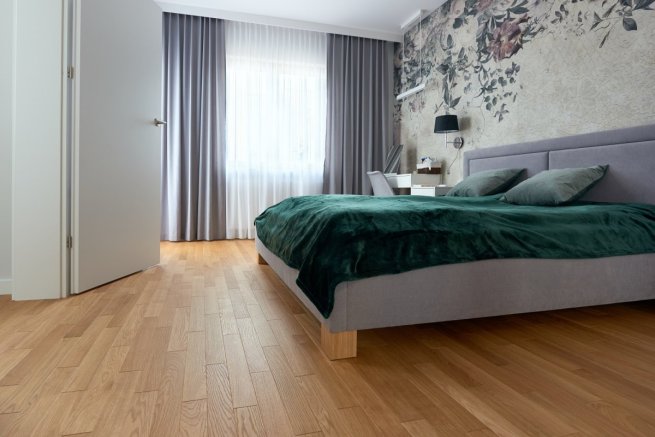
The most common pattern seen with wooden floors. The parquet pattern is based on planks being laid parallel to each other across or along the room. It is simple yet modern, making it suitable for any space, regardless of size or style. The straight English pattern works perfectly in both small and large interiors. It is also the most "democratic" as it is inexpensive to install and requires fewer materials. Its advantage is that it highlights the natural aesthetics of wooden planks, especially when laid in the direction of the light.
Diagonal English Pattern
A good alternative to the straight pattern. Similar to the above, the pattern is achieved by laying planks parallel to each other, but in this case, the floor is laid at a 45-degree angle to the wall. The resulting effect subtly deviates from the standard pattern while still providing a touch of luxury, enriching the arrangement of elegant homes, spacious apartments, and modern apartments.
Parquet
A highly decorative layout for wooden flooring, created by alternating planks vertically and horizontally. The vertical planks are usually longer than the horizontal ones, but they share high-shrinkage wood, which limits the wood's movement and prevents floor distortion. This pattern works well in large commercial or public spaces, such as restaurants, cinemas, and shopping centers.
Brickwork
A fairly regular pattern of flooring that distinguishes itself by shifting joints halfway in relation to each other. It is a simple, uncomplicated layout, ideal for smaller, more modern and minimalist interiors - it harmonizes well with simple, functional furniture.
Checkerboard | Basket Weave Pattern
A classic wooden floor layout consisting of planks creating alternating squares. This pattern looks like a mosaic, a geometrical collage, and it presents itself excellently in rooms characterized by a more refined style. Ideal for this type of layout is wood that changes its volume due to moisture.