





















Floorboards
Engineered wood flooring is a popular flooring solution that has its enthusiasts! At Parkiet Studio, we respond to the needs and expectations of our clients, which is why engineered wood flooring is a permanent part of our offer. So what is their phenomenon? Engineered wood flooring is made of two or three layers and is characterized by the fact that only its top layer is made of noble wood, finished with varnish or oil-wax. Engineered wood flooring can also be beveled or brushed. This practical product is dedicated for floors in various rooms. One of its advantages is that engineered wood flooring works well with water underfloor heating.
In the Parkiet Studio offer, we have all available colors and types of wood on the market, with which engineered wood flooring is finished. In our showrooms, you will find the optimal product for yourself and your arrangement!
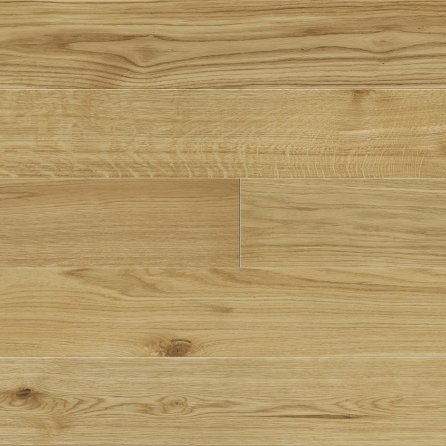
Wood characteristics:
- diverse coloration, any grain pattern, allowable sapwood, healthy and spackled knots up to 3 cm, permissible shine, suitable for underfloor heating
Types of finishes:
- varnished:
- seven-layer coating with UV-cured lacquer,
- lacquer permanently bonded to the wood, does not crack or peel,
- high wear resistance.
- oiled-waxed:
- three layers of oil-wax,
- deep wood impregnation through oil penetration,
- high wear resistance.
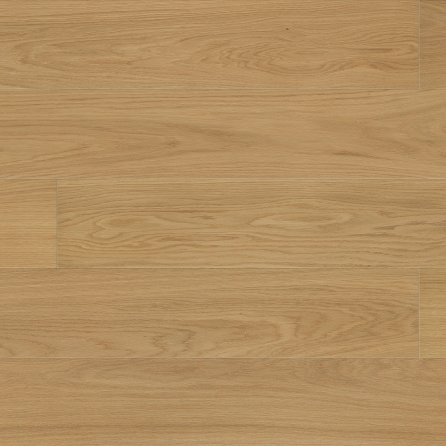
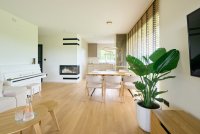
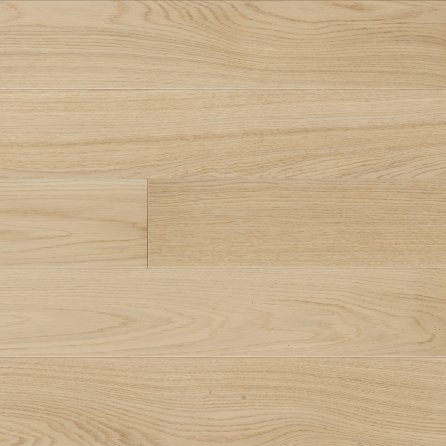
Characteristics of wood:
- similar coloration, any pattern, minimal sapwood and gloss, healthy small knots, special white base, suitable for underfloor heating
Types of finishes:
- oil-waxed:
- three layers of oil-wax,
- deep wood impregnation through oil penetration,
- high wear resistance.
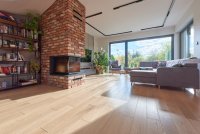
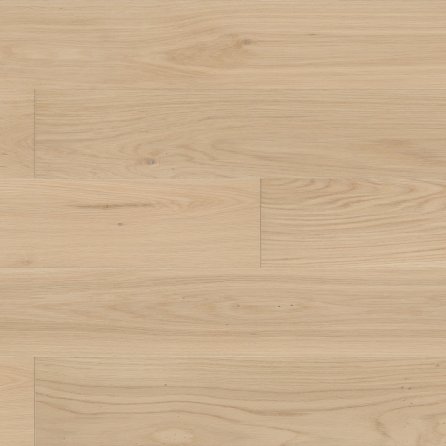
Wood Characteristics:
- similar color palette, any grain pattern, minimal white and gloss, healthy small knots, special white base coat, suitable for underfloor heating
Types of Finishes:
- oiled wax finish:
- three layers of oil wax,
- deep wood impregnation through oil penetration,
- high wear resistance.
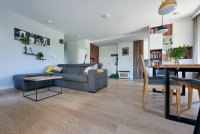
Wood characteristics:
- varied color palette, any grain pattern, acceptable white and gloss, healthy and putty-filled knots up to 1 cm, special white primer, suitable for underfloor heating
Types of finishes:
- oiled-waxed:
- three layers of oil-wax,
- deep wood impregnation by oil penetration,
- high wear resistance.
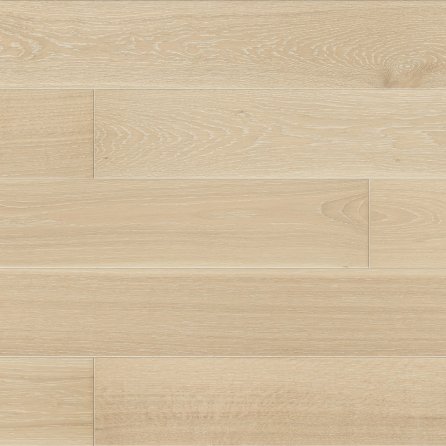
Wood characteristics:
- diverse coloration, any grain, white knots up to 2 cm, acceptable gloss, structured floor, suitable for underfloor heating
Types of finishes:
- oil-waxed:
- three layers of oil-wax,
- deep wood impregnation by oil penetration,
- high wear resistance.
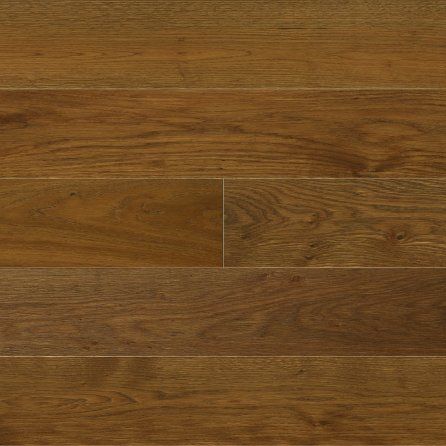
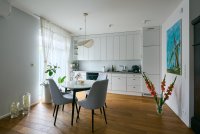
Wood Characteristics:
- diverse coloration, dark antique hue, grain up to 2 cm, filled knots, possible gloss and whiteness, thermal treatment, suitable for underfloor heating
Types of Finishes:
- varnished:
- seven-layer UV-cured varnish coating,
- varnish firmly bonded to wood, does not crack or peel,
- high wear resistance.
- oiled-waxed:
- three layers of oil-wax,
- deep wood impregnation through oil penetration,
- high wear resistance.
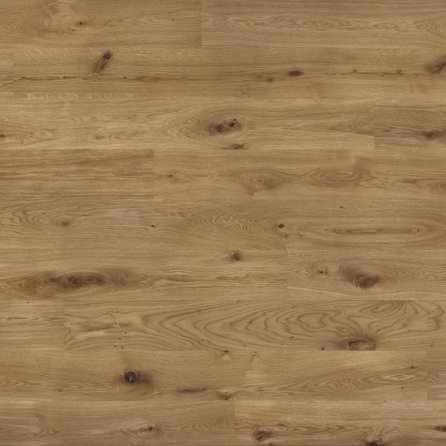
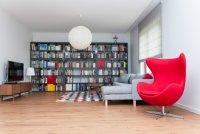
Oak wood is heavy, hard, and characterized by exceptionally high resistance to wear. The extreme durability of this wood allows for oak to be used in a variety of ways for the production of floors, which come in many different variants. Oak wood is light, with diverse structure and extremely high resistance. The Rustic class is characterized by a very varied color and structure of the wood, strong shades, allowable knotty, cracked, and with defects up to a diameter of 60 mm, allowable closed core, not allowable sapwood, large variety of planks, large knots, and intricate visible grain of the wood.
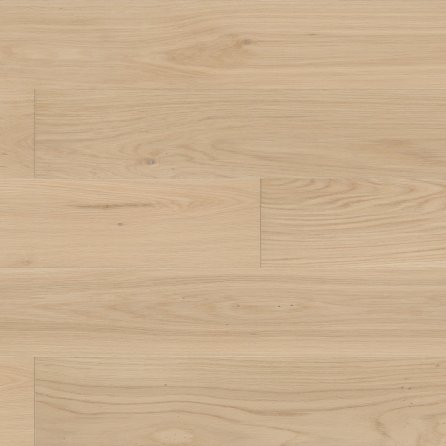
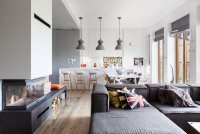
Whitened oak is a trendy and durable flooring option that fits perfectly in modern interiors. To meet our Customers' needs, we offer whitened floors. These floors are laid on site, sanded, sealed, polished, and whitened with oils to achieve the desired shade of white chosen by the Customer. White-oiled floors have a very natural character, with the wood texture being noticeable to the touch. Additionally, it is worth mentioning that dirt and dust are much less visible on light floors.
Upon request, we can create longitudinally and four-sided beveled floors, smooth or brushed, with varying degrees of whiteness, in widths ranging from 9cm up to 18cm.
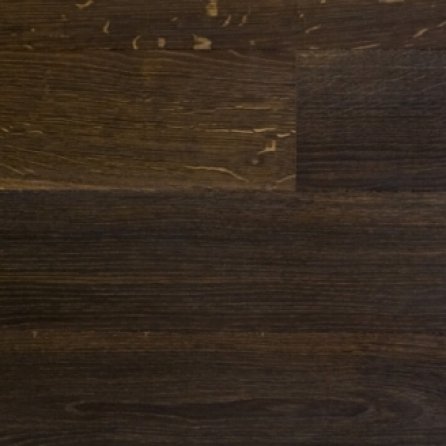

Black oak is a stable and hard wood. Its characteristic black color is achieved through special technological processes. This material does not lose its color after sanding, so with each floor refinishing, we will have the same color. It is perfect for modern interiors - complementing materials such as glass, aluminum, or chrome.
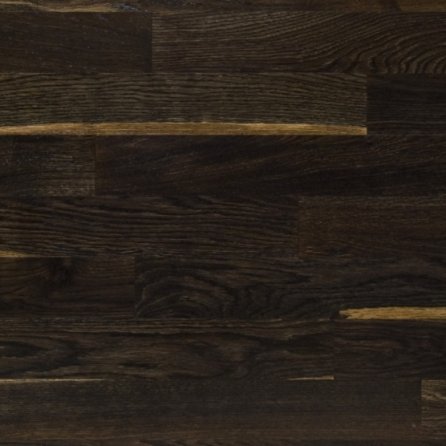
Black oak is a stable and hard wood. Its characteristic black color is achieved through special technological processes. This material does not lose its color after sanding, so with each floor refinishing, we will have the same color. It is perfect for modern interiors - complementing materials such as glass, aluminum, or chrome.
The rustic class is characterized by larger color differences, the material is lighter and more diverse.
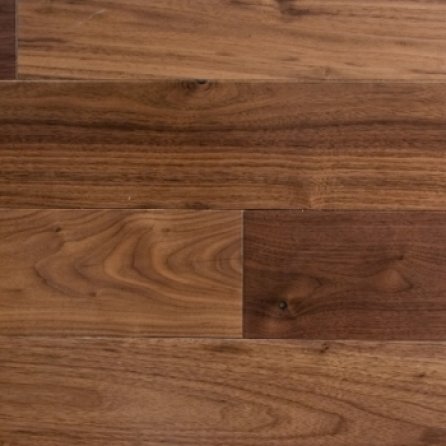
The American walnut is a decorative wood with a distinct, wavy grain pattern of fibers and layers. It is found in the western, central, and northeastern United States, as well as in Canada. It can grow up to 50 meters in height. Its leaves emerge late in spring. The wood has a wide range of color variation from creamy-brown to dark brown.
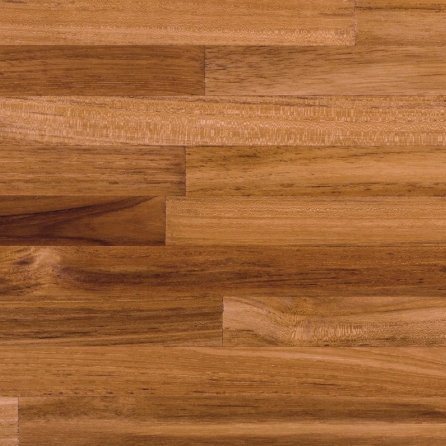
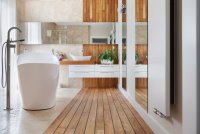
Teak, thanks to its structure and high content of natural oils and silica acid, is very dimensionally stable and has exceptional durability, especially in aquatic environments. It has long been used in the production of ship and yacht elements. Teak is also a wood that works perfectly in bathrooms and saunas.

The boards are finished with natural hard wax oil SAICOS, hardened by oxidation (the boards have a phase on all edges).
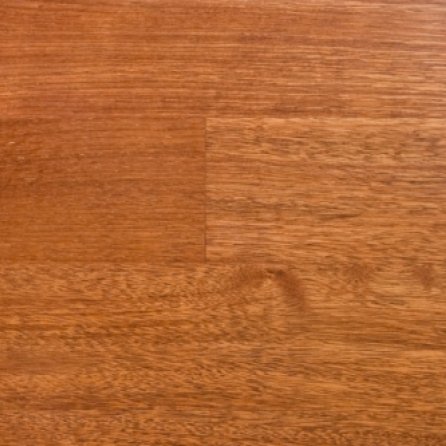
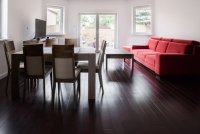
Merbau wood is distinguished by the fact that some of its vessels are filled with yellow, shiny dust, which, under transparent paint and lacquer coatings, deceptively resembles intricately made, golden inlays in the shape of small strips. Merbau wood is enriched by nature with delicate gilding. At the same time, the dark surface color masks any dirt and scratches. A floor made of Merbau wood retains its full aesthetic qualities for a longer time, is exceptionally dimensionally stable and hard, making it very resistant to wear and dents. The color and mechanical properties of the material predispose it particularly for the production of exclusive floors and parquets in prestigious rooms, public buildings, and private homes. The deep brown color of the wood lightened with golden specks emphasizes the dignity of the place and blends perfectly with modern furnishings. It is the most popular and frequently purchased exotic wood.

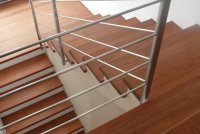
Jatoba wood, sometimes referred to as diamond cherry, originates from Central and South America. Compared to domestic cherry wood, it is indeed "diamond-hard." This material is highly durable, with significant natural resistance to adverse weather conditions. Due to its natural characteristics, Jatoba is suitable for use in residential, industrial, and outdoor spaces.
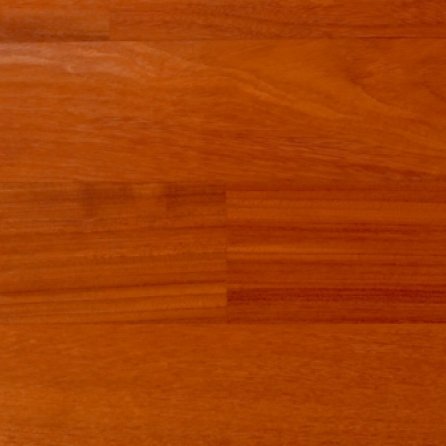
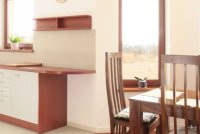
Doussie is a wood with a noble honey color. It is very hard and stable material. Due to its mechanical properties, it is perfect for use as a raw material for flooring production. Doussie is characterized by very high natural resistance, and low values of tangential and radial shrinkage indicate a small tendency of the wood to warp and crack. This makes it less likely for the parquet to dry out when there are changes in humidity. The wood has a light orange color with a delicate grain, usually with straight grain patterns. It is ideal for modern spaces, bringing charm and warmth to the interior.
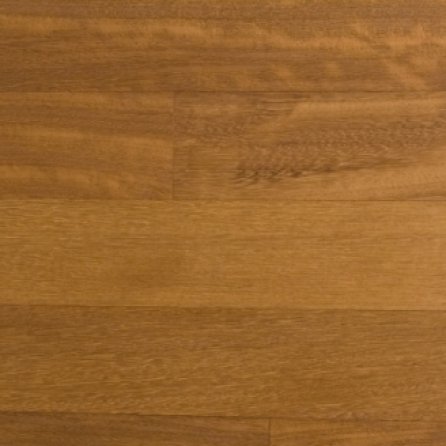
Iroko darkens under the influence of atmospheric factors, taking on a golden-honey color. It is characterized by significant dimensional stability, which is particularly important for use on floors. Additional properties of Iroko make it suitable for use in contact with water. It will perform well in a bathroom or kitchen. Wood with excellent properties. Hard, stable, and moisture-resistant.
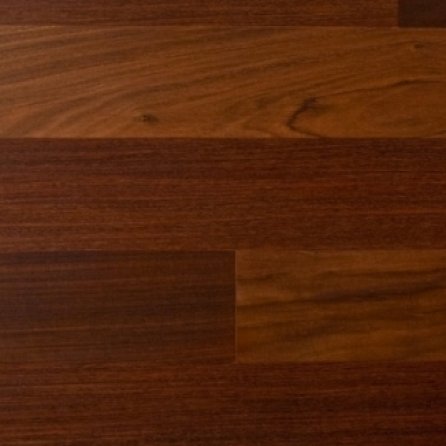
Wood with a natural, deep color ranging from olive-brown to black-brown, often also taking on a dark red hue not commonly found in temperate zone wood. The hardness and stability of this material are exceptionally high, which is particularly valuable for flooring material. Lapacho shares the same hardness class as steel, making it ideal for high-traffic areas.
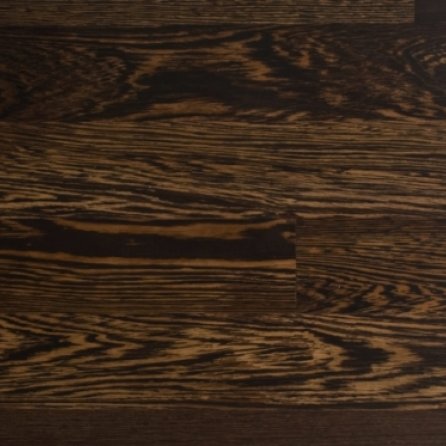
Wenge is a unique type of wood. For thousands of years, it has been used by the indigenous people of the dark land to create ceremonial masks and statues of pagan deities. Its intense dark brown color makes wenge a highly valued material. It is perfect for making floors in heavily used areas, especially in public utility buildings. The high density of the wood makes it resistant to wear, and any dirt marks are not visible on its dark surface. Another advantage of this truly exotic wood is its high natural durability, giving rooms an exclusive character.
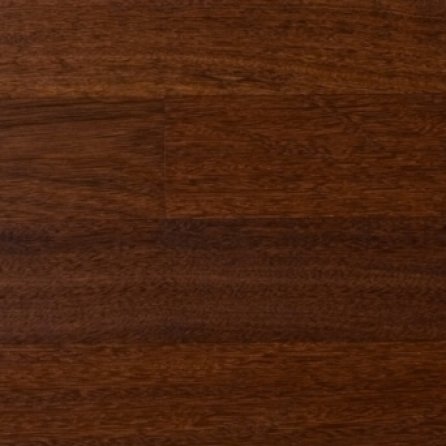
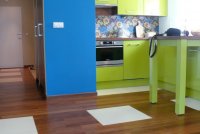
A South American wood species with a brown-coffee color. It is characterized by a uniform color, high hardness, and visible grain pattern. This is a popular exotic wood species, commonly used as flooring material. Sucupira is distinguished by lighter streaks on a dark background. It provides an interesting alternative to thermally treated materials.
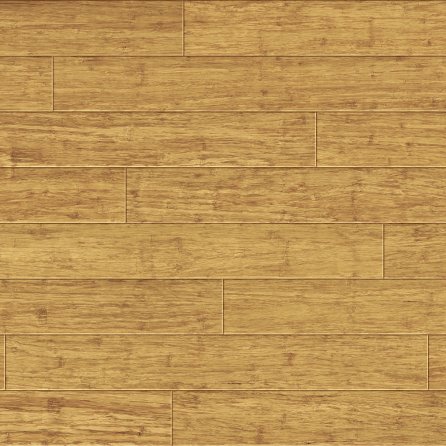
Floors made of bamboo wood are characterized by an aesthetic and unique appearance, as well as high resistance to wear. Pressed bamboo flooring is created through material processing under high pressure, resulting in a change in structure and appearance compared to bamboo in horizontal or vertical arrangement. The pressing process significantly improves the technical properties of the bamboo board. With increased density, it becomes hard and much more resistant to damage.
Pressed bamboo has an interesting pattern and a unique character. The ecological aspect is also important. Bamboo is the fastest-growing plant, which shortens the forest regeneration process compared to other tree species.
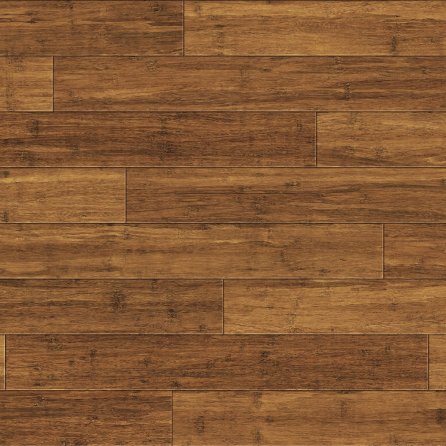
Floors made of bamboo wood are characterized by an aesthetic and unique appearance, as well as high resistance to wear. Pressed bamboo flooring is created through material processing under high pressure, resulting in a change in structure and appearance compared to bamboo in a horizontal or vertical arrangement. The pressing process significantly improves the technical properties of the bamboo board. With increased density, it becomes hard and much more resistant to damage.
Pressed bamboo has an interesting pattern and unique character. The ecological aspect is also important. Bamboo is the fastest-growing plant, which shortens the regeneration process of forests compared to other tree species.
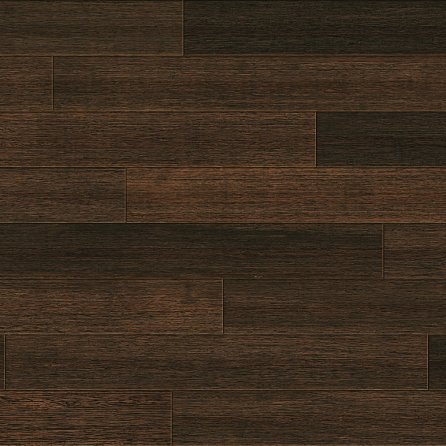
Floors made of bamboo wood are characterized by an aesthetic and unique appearance, as well as high resistance to wear. Pressed bamboo flooring is created through material processing under high pressure, resulting in a change in structure and appearance compared to bamboo in a horizontal or vertical arrangement. The pressing process significantly improves the technical properties of the bamboo board. With increased density, it becomes hard and much more resistant to damage.
Pressed bamboo has an interesting pattern and unique character. The ecological aspect is also important. Bamboo is the fastest-growing plant, which shortens forest regeneration compared to other tree species.
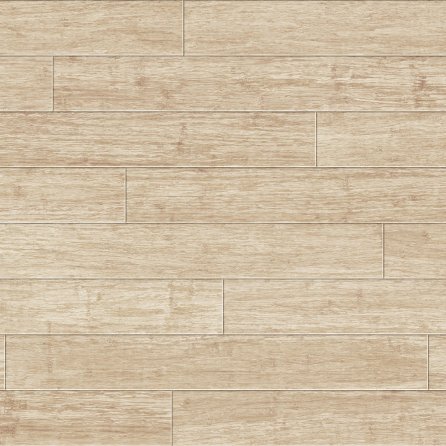
Floors made of bamboo wood are characterized by an aesthetic and unique appearance, as well as high resistance to wear. Pressed bamboo flooring is created through the processing of material under high pressure, resulting in a change in structure and appearance compared to horizontally or vertically laid bamboo. The pressing process significantly improves the technical properties of the bamboo board. With increased density, it becomes hard and much more resistant to damage.
Pressed bamboo has an interesting pattern and a unique character. The ecological aspect is also significant. Bamboo is the fastest-growing plant, which shortens the regeneration process of forests compared to other tree species.