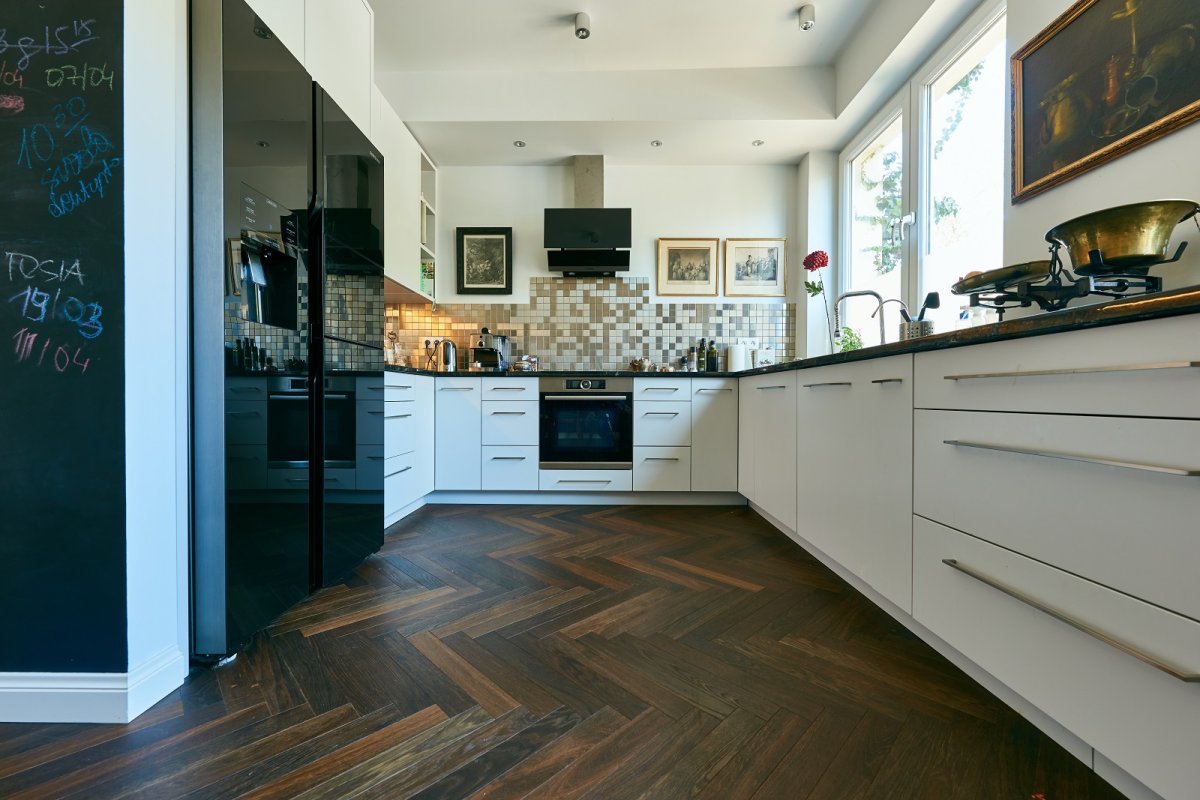


























Wooden floor in the kitchen - a good solution or not?
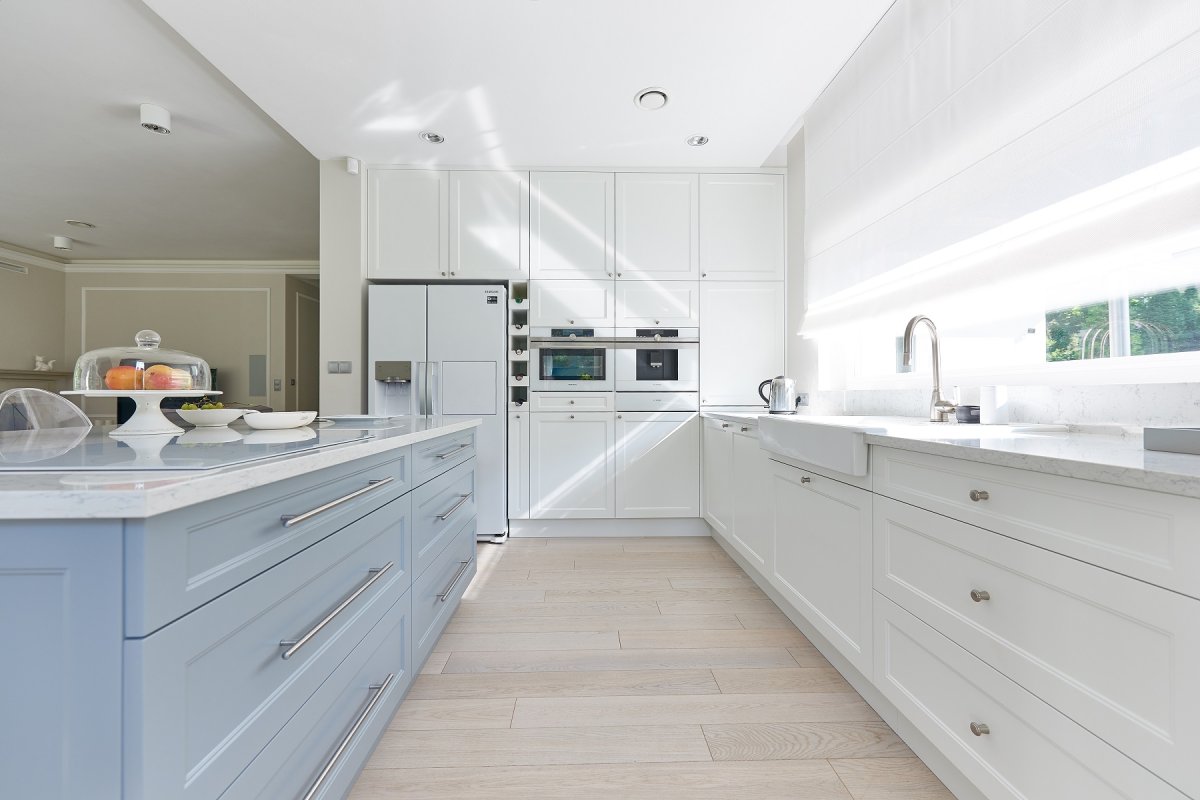
The kitchen is a unique place in every home. For generations, it has been a space for gathering with family, friends, and a passion for cooking. It is where we spend most of our free time. We discover new flavors, experiment with them, and enjoy the company of loved ones. This place is important from almost everyone's perspective, so designing it requires special commitment and planning.
In this context, the floor becomes significant. In terms of visual aspects, interior designers emphasize that a wooden floor in the kitchen works particularly well when we want to stylistically connect the kitchen interior with another room, such as the living room or entrance area. Having the same type of flooring in the kitchen and hallway will visually unify the space and make it appear larger than it actually is.
So, the question arises, does a wooden floor pass the practical test, aside from its evident aesthetic qualities?
The answer is: definitely yes! The key, as always, is the proper material protection system. Choosing professional oils or varnishes and specific types of wood will allow you to create an interior where a wooden floor will not only be a timeless decoration for the kitchen but also a very durable solution! However, it is important to choose a material resistant to both stains and moisture, yet easy to clean and maintain.
The offer of wooden floors is incredibly rich. However, the specifics of the kitchen require a wood species that is durable, resistant, and easy to keep clean. It is advisable to avoid floors made of softwood, such as pine, which is more susceptible to moisture due to its low density. Good alternatives are boards made of exotic woods (iroko, merbau, or doussie), but our native oak is currently the top and most frequently purchased material.
The choice of floor construction is also flexible. Both a solid wood floor, made from a single piece of hardwood, and an engineered wood floor, characterized by a more flexible structure, will work perfectly. For kitchens with higher humidity and frequent temperature changes, the latter is especially recommended, as it is less affected by external factors - engineered boards expand and contract to a minimal degree.
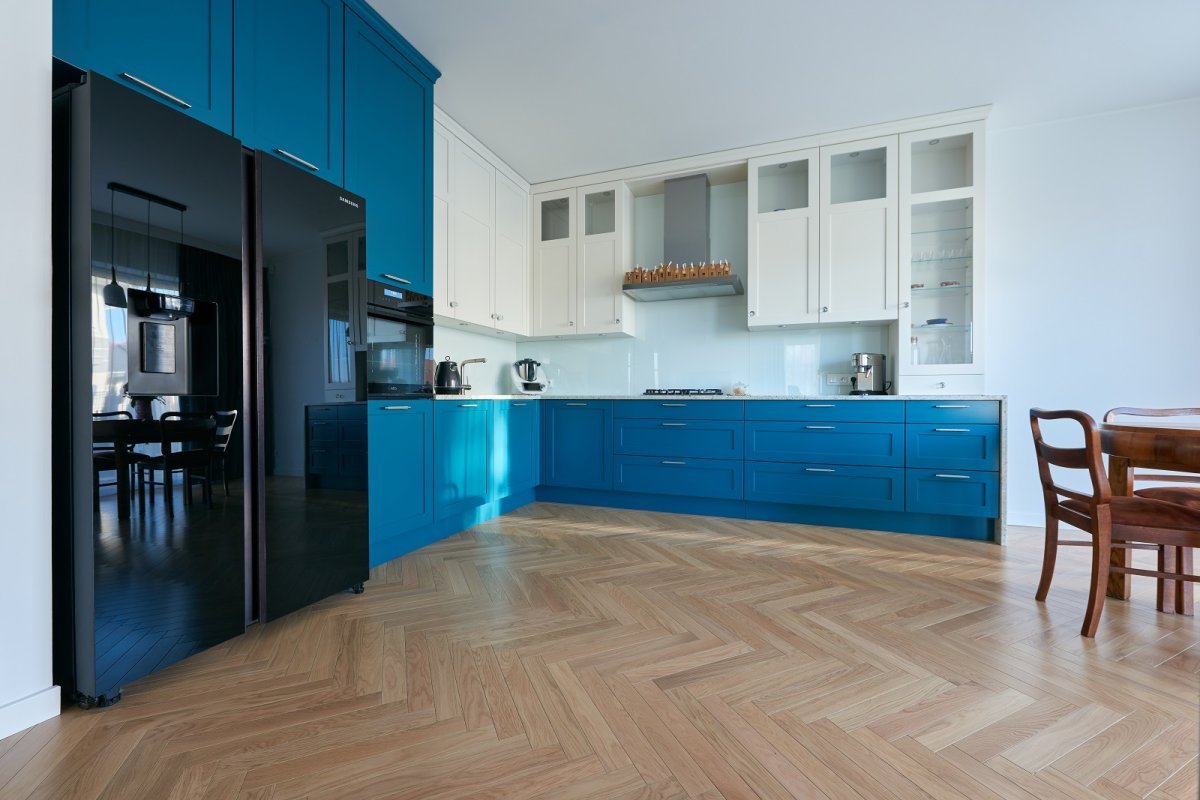
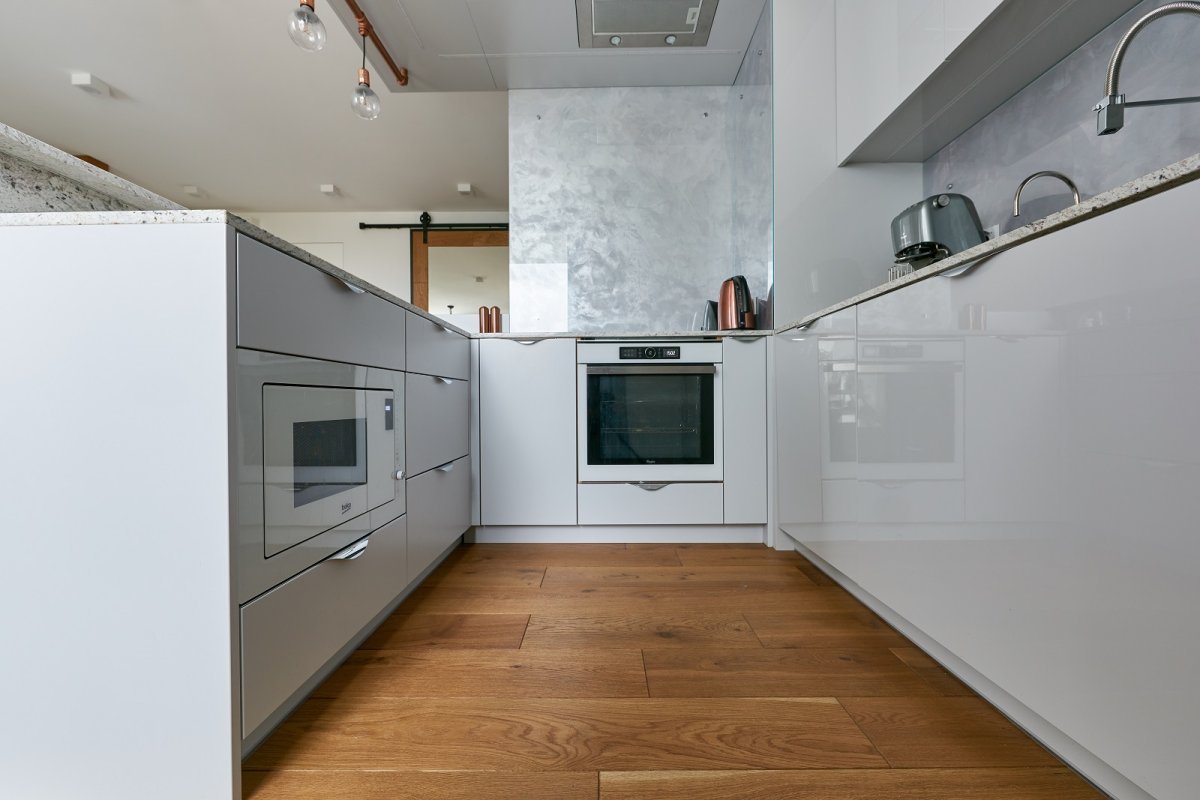
The wood species is important, but the method of protection is equally crucial. A kitchen floor finished with varnish is highly resistant to dirt and stains and easy to maintain. On the other hand, an oiled floor allows for localized conservation and repair of damaged parquet but is more demanding in terms of care. Regardless of the choice, the functionality of both types of floors can be enhanced by factory brushing, which minimizes signs of daily use.
The floor finish is also important. The boards in our offer are available in gloss, semi-gloss, and matte finishes. The decision on which variant is better is individual and depends on the kitchen's arrangement and the owner's personal preferences, but wear and tear on matte and semi-matte floors are least visible.
One thing is certain, a wooden floor should be protected from the harmful effects of sunlight, which can alter the wood's color. Therefore, it is worth checking whether the floor has professional and dedicated varnishes or oils with UV filters.
Daily cleanliness in the kitchen is also significant. Spills and grease should be wiped up immediately, and leaks from large household appliances, especially dishwashers, refrigerators, and sinks, should be prevented. Specialized cleaning products for wooden floors are recommended for cleaning.
A key advantage of a wooden floor is the possibility of complete renewal through sanding and resealing. This process, carried out every 10-15 years, can restore it to its pre-usage condition. Additionally, many appreciate its compatibility with underfloor heating systems, making it the deciding factor in many purchase decisions.